
What is Bullying?
Bullying is abusive, intimidating, malicious or insulting behaviour, or an abuse or misuse of power, which undermines, humiliates, degrades or injures the recipient.
Bullying behaviour includes:
- Excluding or isolating someone socially
- Physically abusing or threatening abuse
- Making discriminative jokes or comments
- Intruding on a person's privacy by pestering, spying or stalking
- Abuse of authority or power
Bullying is not always physical. A persons words, actions and online behaviour this can make someone feel unsafe, isolated or powerless.
What is Harassment?
Harassment is unwanted behaviour that causes, or intends to cause, alarm, distress or fear.
It can make someone feel uncomfortable, threatened, humiliated or unsafe. Harassment can also affect a person's dignity or create a hostile, intimidating or degrading environment.
Harassment generally involves behaviour happening more than once, although a single serious incident may still need to be reported and addressed
Harassment includes:
- Derogatory jokes that create a degrading or hostile environment
- Racial or ethnic slurs
- Sexual Harassment
- Verbal Abuse
- Physical Assault
- Distribution of misinformation
What is Online Harassment?
Online harassment is when digital technology is used to target, threaten, intimidate, embarrass or distress someone.
It can happen through social media, messaging apps, gaming platforms, emails or other online spaces.
You might also hear terms such as cyberbullying, cyber-harassment, cyber-aggression or cyber-victimisation.
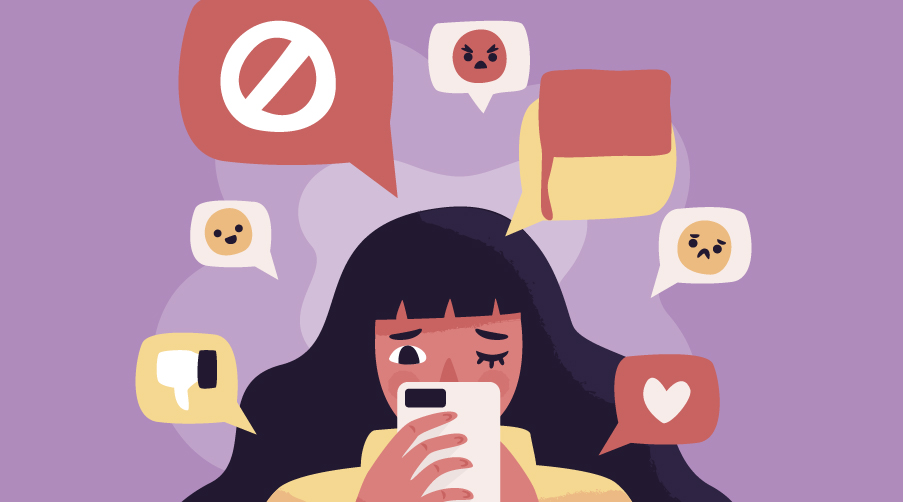
Online Harassment includes:
- Persistent use of electronic communication to harass, frighten or monitor an individual
- Distribution of misinformation or malicious information
- Online disclosure of sexual or intimate photos or videos without consent
- Fraudulent representation (also known as catfishing)
Bullying and harassment can happen anywhere, to anyone, in person, at school, work, social groups or online.
Impact of Bullying and Harassment
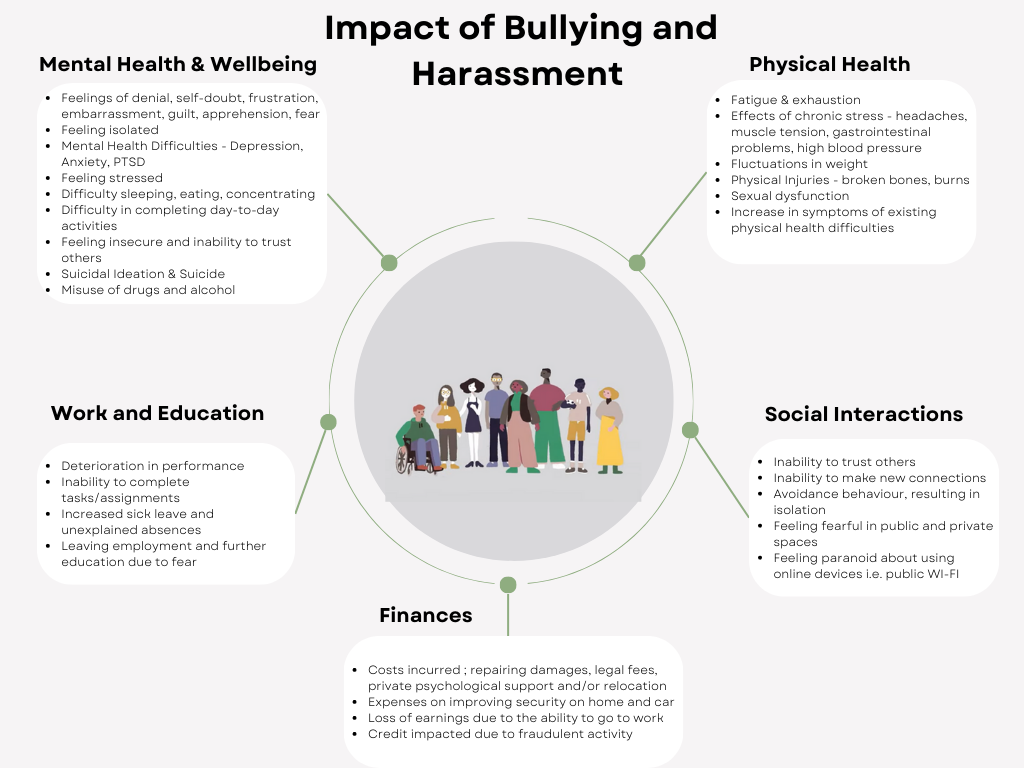
Impact of Bullying and Harassment
What to do if you, or someone you know is being bullied and harassed:
If someone's behaviour makes you feel unsafe, threatened, humiliated or repeatedly uncomfortable, that is not okay and you do not have to deal with it alone.
You can speak to a member of the Standing Together team by making a disclosure on our Report and Support system. A member of the team will contact you initially, and can continue providing support on available safety and reporting options if this is something you wish to pursue.
National Bullying Helpline - this service provides advice, guidance and resources for anyone who may be experiencing bullying, or is concerned about someone being bullied.
Helpline: 0300 323 0169
Telephone: 0845 225 5787
Anti-Bullying Alliance - a coalition of organisations and individuals that are united against bullying.
Childline - free, private and confidential service for children and young people. Whatever your worry, you can speak to someone online or on the phone anytime.
NSPCC - call NSPCC confidentially to report any safeguarding concerns you have. Both Childline and NSPCC can help you report bullying to the police.
Ditch The Label - a charity supporting those who have been bullied, and those who are doing the bullying too.
The University of Leicester is committed to protecting freedom of speech within the law. This means students, staff and visitors can share and discuss ideas, even where others may disagree.
But if you feel you have been, harassed or discriminated against, this is not ok and may be against the law. We are here to listen and support you.
You can disclose this to us via our Report & Support disclosure form, and we can provide you with support.